
AAPI & MULTICULTURAL IDENTITY THERAPY IN CALIFORNIA & WASHINGTON
Your whole self belongs in the room, the parts you’re proud of & still figuring out.

You’ve been putting this off for a while, that’s okay, and there’s no wrong time to start.
You may look like you’re doing well on the outside, yet feel pulled in different directions on the inside—balancing family expectations, cultural values, and the parts of you that want something different. Maybe you’ve learned to adjust who you are to keep the peace, carry responsibility for others’ feelings, or live according to unspoken rules, all while quietly wondering who you are beneath obligation and duty. This kind of inner conflict can feel draining, confusing, and lonely.
For some, this also shows up in relationships. When you're in an interracial or cross-cultural partnership, the complexity of cultural difference doesn't stay in the background — it shapes how you fight, how you love, what you need, and how understood you feel. Individual therapy can help you understand your own side of that dynamic more clearly.
At Tiny Cottage Therapy, cultural identity isn’t something we analyze from a distance; it’s something we explore together. Your background, heritage, and family stories are not obstacles to overcome, but meaningful parts of your story. Therapy becomes a space to make sense of these influences with compassion, clarity, and alignment with what truly matters to you.
Cultural expectations have shaped your life in ways that generic advice doesn't touch.
Do you struggle with these cultural-related issues?
Adjusted who you are to fit in or make others comfortable
Felt pressure to live according to family or cultural scripts
Wondered “Who am I, really?” underneath obligation and duty
Felt torn between what you want and what others expect
Struggled to reconcile different parts of your identity
Held yourself accountable for others’ feelings or approval
Navigating a relationship where cultural difference creates friction, distance, or misunderstanding
The goal isn’t perfection, it’s becoming the person you never had permission to be.
Tiny Cottage Therapy blends culturally responsive practice with tools that help you move from code-switching to living in alignment with yourself.

What to Expect from
Cultural Identity Therapy
Clarifying Your Internal Conflict
We explore the tension between who you feel you should be and who you actually want to be.
Rebuilding Connection to Self
We work toward a sense of self that isn’t solely defined by roles, obligations, or expectations. And help you can make decisions that feel true to you.
Understanding Cultural & Family Influences
We’ll explore cultural norms and family expectations have left lasting patterns in your identity, decision-making, and self-image.
Strengthening Voice & Choice
Together, we support your ability to choose boundaries, values, and actions that honor both who you are and where you come from.
Navigating Cross-Cultural Relationship Dynamics
Explore how cultural difference shows up in your relationships: what you need, how you seek connection, and how to move through cultural friction without losing yourself in the process.
Processing Racial Stress & Intergenerational Trauma
EMDR and Brainspotting are particularly useful for processing intergenerational patterns, racial stress, and cultural grief that have accumulated over time and across generations. My Brainspotting training included a BIPOC emphasis, which means these approaches are applied with your specific experience in mind.
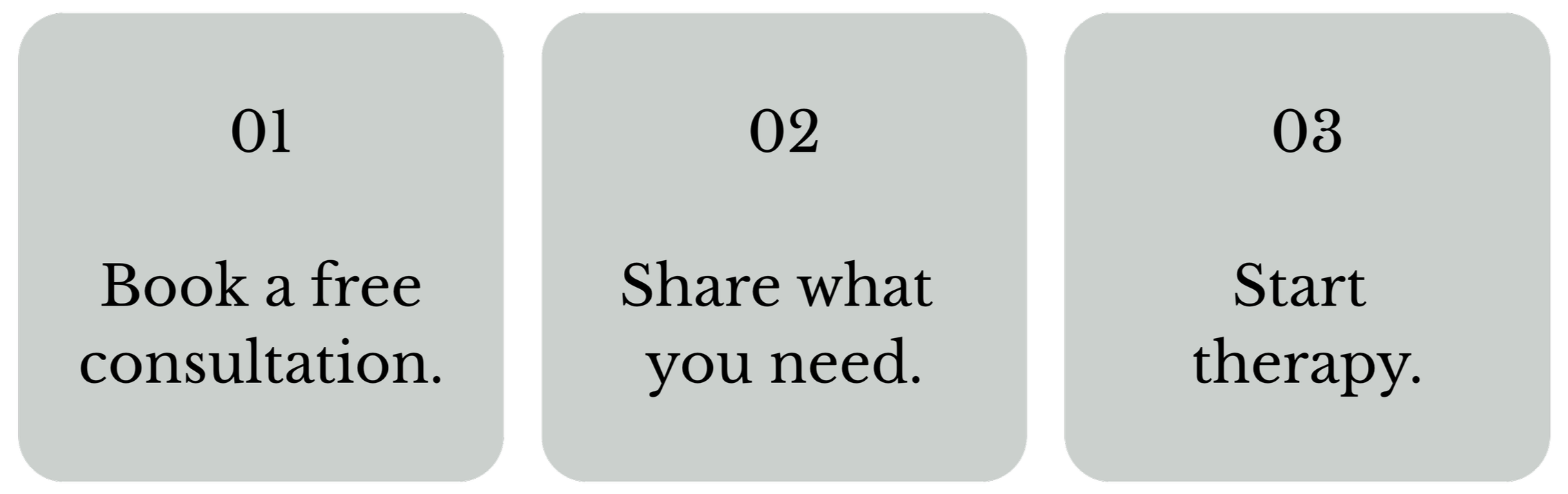
HOW IT WORKS
Three simple steps
to becoming the version of yourself
you were always meant to be.
Telehealth · California & Washington · Accepting new clients now
Frequently Asked Questions
-
Cultural identity therapy helps you explore how your cultural background, family history, and community expectations shape your sense of self, relationships, and emotional patterns. It supports deeper understanding of how internal and external cultural influences affect your wellbeing.
-
This work is especially supportive for adults navigating questions around belonging, intergenerational expectations, mixed cultural identities, and pressure to meet family roles or norms. It’s meaningful for those feeling tension between personal values and cultural/familial expectations.
-
In therapy, we explore how family expectations show up in everyday choices, relationships, and self-judgment. This may include unpacking “shoulds,” roles within the family system, and how cultural values influence emotional responses and boundaries.
-
While it includes reflection and conversation, cultural identity work often focuses on context (how cultural systems, intergenerational patterns, and identity pressures shape experience) rather than only on individual symptoms. It often includes narrative exploration, relational patterns, and meaning-making.
-
No, it supports anyone navigating family pressure, cultural expectations, internal conflict, or questions of belonging. Many clients identify as multicultural, mixed-heritage, or living between cultural worlds. I am Asian American and have lived experience navigating these dynamics but my clients come from all backgrounds.
-
Yes. While this is individual therapy — not couples work — many clients find that understanding their own cultural patterns, needs, and responses is exactly what shifts things in their relationships. Individual therapy can help you get clear on your own side of cross-cultural dynamics, which often changes how you show up with your partner, family, or community.
-
No, I work with clients from all cultural backgrounds. While I specialize in supporting AAPI, mixed-race, and multicultural individuals navigating cultural identity and family expectations, my practice is open to anyone who resonates with this approach. Many of my clients appreciate working with a therapist who prioritizes cultural awareness and understands the nuances of navigating multiple identities, family systems, and intergenerational patterns—regardless of their specific background.
-
Yes. Racial stress, cultural grief, and intergenerational patterns often live in the body in ways that are hard to access through conversation alone. Both EMDR and Brainspotting work with how these experiences are held in the nervous system. My Brainspotting training included a BIPOC emphasis, which means these approaches are applied with cultural context in mind, not just adapted from general trauma work.
READY WHEN YOU ARE
You've been just getting through it for long enough. You deserve to actually feel good, and that starts with one conversation.
A free 15-minute consultation is your next step. No pressure, no paperwork, just a conversation to see if this feels like a good fit.
Telehealth · Accepting new clients in California & Washington · caitlin@tinycottagetherapy.com