
EMDR THERAPY IN CALIFORNIA & WASHINGTON
You’ve done everything right, so why does it still feel this way?

You may find yourself held back by emotional reactions that feel bigger than the current moment. Memories from the past still surface with intensity, or you feel triggered by situations that still feel overwhelming. Maybe your body braces before you even consciously recognize the memory, or thoughts and sensations linked to distress stay stuck, looping and disrupting your day-to-day life.
Trauma-informed support for healing distress & reprocessing memories.
What is EMDR?
EMDR stands for Eye Movement Desensitization and Reprocessing. It is a structured form of psychotherapy that uses bilateral stimulation such as guided eye movements, tapping, or sounds while you focus on distressing memories. This process helps your brain reprocess those memories so they no longer hold the same emotional charge.
You’ve never actually had to carry this alone, you just didn’t know there was another way.
At Tiny Cottage Therapy, EMDR is offered in a trauma-informed, culturally attuned way so that your healing is paced with care and safety. EMDR helps your brain and body access natural healing processes. While the memory remains part of your story, EMDR can help it become more manageable so you can live with greater presence, ease, and clarity.

Caitlin Blair, LCSW, LICSW · UC Berkeley MSW · AAPI specialist · Accepting new clients in California & Washington
Who does EMDR help?
EMDR can be especially supportive for dealing with:
Complex trauma or single-event trauma
Racial or intergenerational trauma
Chronic stress and burnout
Anxiety, overwhelm
Depression
Low self-esteem and self-criticism
What to Expect from EMDR Therapy
Safe and Structured Exploration
We begin by building safety, understanding your history, and collaboratively identifying memories or experiences to work on. EMDR follows a structured, phased process that emphasizes your readiness and comfort.
Nervous System Regulation Skills
Before reprocessing, we co-develop grounding and coping skills so your nervous system feels supported throughout the work, both in and outside sessions.
Bilateral Stimulation and Reprocessing
During reprocessing phases, you will focus briefly on targeted memories while engaging in bilateral stimulation such as guided eye movements, sound or other forms of rhythmic stimulation. This supports your brain in reorganizing how the memory is stored.
Emotional Relief and Integration
As processing progresses, the emotional intensity and reactivity linked to those memories often lessen. Clients commonly report feeling more grounded, less triggered, and more in control of their responses.
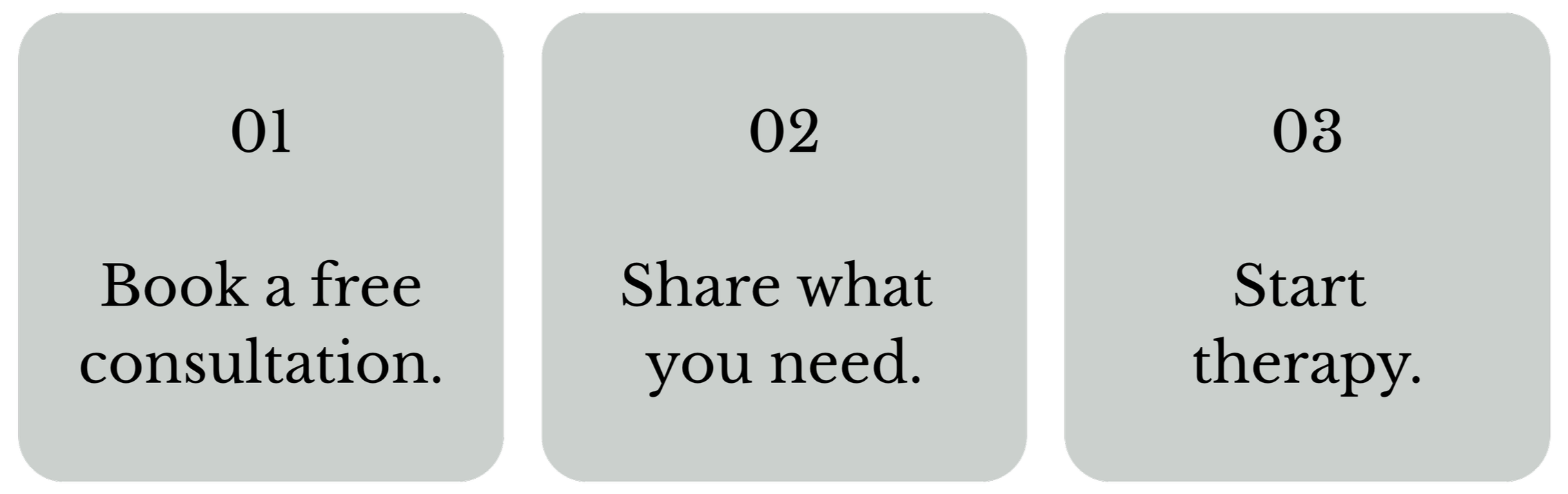
HOW IT WORKS
Three simple steps
to becoming the version of yourself
you were always meant to be.
Telehealth · California & Washington · Accepting new clients now
Frequently Asked Questions
-
EMDR stands for Eye Movement Desensitization and Reprocessing. It is a structured form of psychotherapy that uses bilateral stimulation such as guided eye movements, tapping, or sounds while you focus on distressing memories. This process helps your brain reprocess those memories so they no longer hold the same emotional charge.
-
EMDR works by activating your brain’s natural information-processing system, allowing painful or overwhelming memories to be processed in a way that reduces emotional intensity and strengthens adaptive thinking and responses.
-
While EMDR is widely known for treating trauma and PTSD, it can also support anxiety, depression, chronic stress, distressing memories tied to relationships or identity, and other challenges linked to overwhelming experiences.
-
No. You are never required to relive or narrate every detail of a painful memory. EMDR is focused on reprocessing what your nervous system holds rather than complete recounting of events.
-
Yes. EMDR naturally works well with other somatic and mindfulness based therapies like the trauma-conscious yoga method and IFS. It can also be a great supplement to “talk therapy.”
Ready to Begin EMDR Support?
If your memories or emotional distress still feel larger than the current moment, EMDR can help you change how you relate to those experiences. You do not have to carry old pain on your own. EMDR offers a way for your nervous system and your mind to catch up with who you are today.