
If you’re Asian American, you may have noticed that some of the heaviest things in your family are the things nobody says out loud.
Maybe it’s the way your mom gets angry when money comes up. Maybe it’s your dad’s silence, or how “I’m fine, don’t worry about me” is the answer to everything. Maybe it’s the underlying pressure to do well, to be good, to not make trouble, even though no one ever told you that directly.
If any of that feels familiar, you may be carrying something that started long before you were born. Therapists call it intergenerational trauma.
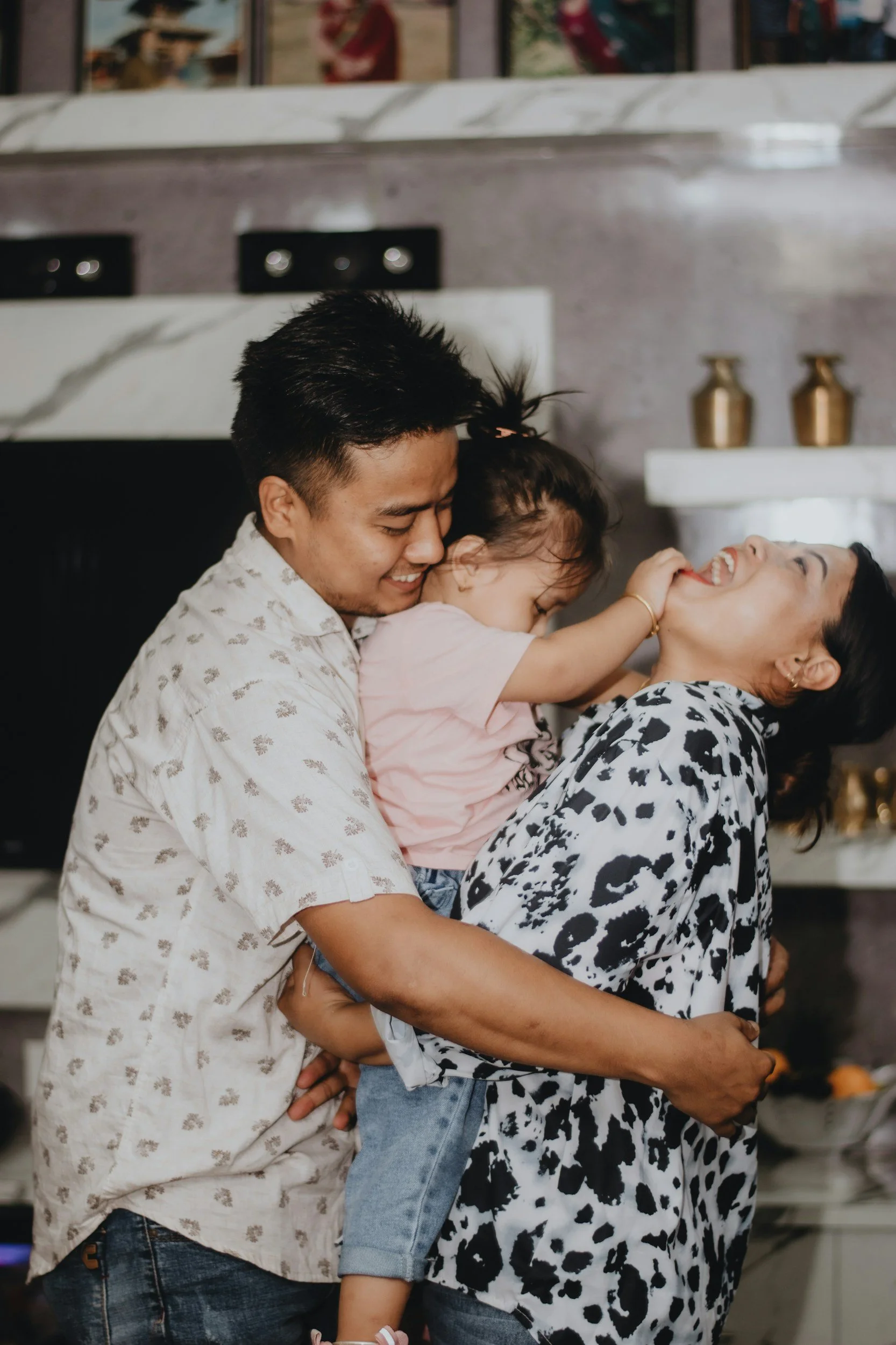
What is Intergenerational Trauma?
Intergenerational trauma (sometimes called generational, transgenerational or inherited trauma) is the way the effects of overwhelming experiences get passed down through families. The person who lived through the event may never have had the chance to process it, and so the survival strategies they built—and the fear underneath them—get handed to the next generation.
It isn’t necessarily passed down as a story but rather as a way of being: how a parent responds when you’re upset, what feels safe to talk about, what you learned you had to do to be loved.
Researchers are still working out the exact mechanisms. Some of the pathway is clearly relational and behavioral: children learn from the environment their caregivers create, and caregivers who are carrying unprocessed trauma often parent from survival mode. Some researchers are also studying biological and epigenetic links. What we do know from both research and clinical experience is that trauma doesn’t stay neatly in the past.
Where it Comes From in Asian American Histories
Asian American families aren’t a monolith. Our histories span dozens of countries, languages, religions, and migration stories. But many of us share family backgrounds shaped by things like:
War, displacement, and refugee experiences, including the Vietnam War, the Korean War, the Khmer Rouge genocide, the Partition of India, and the Japanese occupation of Asia
Colonization and political upheaval
Immigration itself, which often means leaving behind family, community, status, and language, sometimes with very little choice
Incarceration and exclusion, such as Japanese American internment and the Chinese Exclusion Act
Poverty and scarcity, whether back home or in the first years after arriving
Racism and being treated as a perpetual foreigner in the U.S.
Many of our parents and grandparents did what they had to do to survive. They worked relentlessly, stayed small, kept their heads down, and didn’t have the time, safety, or cultural permission to feel what they were feeling. That strength is real, and so is its cost.
How it Shows Up in Asian American Families
Intergenerational trauma rarely looks like what we stereotypically think of “Trauma.” More often it looks like everyday family life.
Here are some common patterns:
1. Emotions go unspoken.
Love is shown through food, money, or sacrifice instead of words. “Have you eaten?” can mean “I love you.” But when feelings are rarely named, many of us grow up unsure how to name our own.
2. Achievement as safety.
When your family’s survival once depended on stability, education and career success can start to feel like protection rather than a choice. Many high achievers I work with realize that their drive is partly fear: that if they stop, everything could fall apart.
3. Over-functioning and people pleasing.
You may have learned early to be the easy kid, the responsible one, the translator, the peacekeeper. You became everyone else’s support system, and you can’t remember the last time someone asked how you were doing.
4. Guilt and obligation.
Filial piety can be a beautiful value. But when it’s tangled with trauma, setting a boundary can feel like betrayal, and caring for yourself can feel selfish.
5. Shame, silence, and “what will people think?”
Mental health struggles may be seen as weakness or as something that brings shame on the family. So people suffer privately and quietly, sometimes for decades.
6. Hypervigilance and anxiety.
If your parents lived through danger or instability, you may have absorbed a sense that something bad could happen at any time. That can show up as chronic worry, difficulty relaxing, or a body that never fully powers down.
7. Conflict avoidance or explosive conflict.
Some families avoid hard conversations entirely. Others have intense blowups followed by silence, with no repair. Either way, many of us never learned what healthy conflict looks like.
8. Feeling caught between worlds.
If you grew up straddling two cultures, you may feel like you never fully belong in either. That can leave you with a split sense of self, and a quiet grief that’s hard to explain to people outside your experience.
Why you Might Feel it in Your Body
Trauma isn’t only stored in memories or beliefs. It lives in the nervous system. That’s why many people feel intergenerational patterns as tension in the chest, a tight jaw, a racing mind at night, or a sense of being “on” all the time, even when nothing is wrong.
It’s also why talking about it, while valuable, isn’t always enough. Insight can tell you why you do something. It doesn’t always change what your body does in the moment.
You’re not Broken, and You’re Not Betraying your Family
This is the part I most want you to hear:
Recognizing intergenerational trauma isn’t about blaming your parents or rejecting your culture. Most of the time, the people who raised us did the best they could with what they had. You can hold compassion for them and acknowledge that some of what you inherited is hurting you.
Healing doesn’t mean cutting off the parts of your heritage you love. It means getting to choose what you carry forward, and what you’re ready to set down.
What Healing Can Look Like
Healing looks different for everyone, but it often includes:
Naming what’s happening. Simply having language for these patterns can be a relief.
Learning to feel safe in your body. Somatic and nervous-system-based practices help you build regulation from the ground up.
Getting to know your “parts.” Approaches like Internal Family Systems help you understand the protective parts of you (the achiever, the caretaker, the critic) with curiosity instead of judgment.
Processing stuck experiences. Therapies like EMDR and Brainspotting can help your brain and body reprocess experiences that still feel present.
Practicing boundaries without abandoning your values. Learning how to say no with care, and how to stay connected while protecting your energy.
Finding community. It matters to be around people who just get it, without needing a long explanation.
You don’t have to figure this out alone
If you read this and thought this is my family, you’re not alone. Many of the people I work with are high achievers who have “done everything right” and still wonder why it feels like this. Often, part of the answer is that they’ve been carrying more than their own story.
In my work, I support AAPI and multicultural adults who want to understand these patterns, set boundaries that feel true to them, and finally live their lives instead of just getting through them. Your cultural background and family history aren’t separate from our work together. They’re a central part of it.
If you’d like to explore this, I offer a free 15-minute consultation: no paperwork, no pressure. You don’t even need to know exactly what you need yet.
Caitlin Blair, LCSW, LICSW, is an Asian American therapist providing online therapy for adults in California and Washington. She specializes in trauma, anxiety, burnout, and AAPI and multicultural identity using EMDR, Brainspotting, somatic therapy, and IFS-informed approaches.